Responsive Visibility
Responsive Visibility adds block visibility controls to every Gutenberg block. You choose which screen sizes a block shows on, and the plugin hides it on the rest with CSS media queries. There is no custom CSS to write and nothing to configure in your theme. To hide a block on mobile but keep it on desktop, open the block settings in the editor sidebar and switch the device off. Most visibility plugins give you three fixed sizes. Responsive Visibility lets you define your own custom breakpoints instead, so you can add a widescreen rule for large monitors, a small-phone rule, or whatever your layout needs, and name each one. You manage them on a single settings page, the way Elementor handles breakpoints. A few things people use it for: hiding a large hero image on phones to cut load time, showing a different call to action on desktop, or keeping a sidebar widget off small screens. Any block becomes a conditional block without a shortcode or a line of code. For a walkthrough, watch this tutorial: How It Works (3 Steps) Edit any block in the Gutenberg editor and open the Responsive Visibility panel in the sidebar. Pick the devices to hide it on — mobile, tablet, desktop, or any custom breakpoint you defined. Save. The block is hidden on exactly those screens — no custom CSS, no theme edits, no shortcodes. Why Responsive Visibility? Unlimited custom breakpoints — not just mobile/tablet/desktop. Define any number of named device ranges and the plugin generates the matching CSS media queries automatically. Cache-friendly — visibility uses CSS classes and media queries, so every visitor gets the same HTML. It works with any caching plugin and updates live as the screen resizes. Works with any theme — block themes or classic themes, with no template edits and no dependencies. Backward compatible — blocks hidden with earlier versions keep working after an update, and your saved breakpoints are not lost. Built for Gutenberg — controls live in the native block Inspector, right where you already edit. Key Features Hide or show blocks by device (desktop, tablet, mobile, and any custom breakpoint) Visibility Conditions — show or hide blocks by login status, user role, specific user or post, post type, page type, URL query param, or shortcode, with All/Any logic Unlimited custom breakpoints — add, rename, reorder, and set pixel widths from Settings → Responsive Visibility Dynamic CSS generation — pixel values come from your saved breakpoints, never hardcoded Cache-safe responsive design — CSS-based hiding that survives full-page caching Per-block control — settings are applied per block, not per page Seamless Gutenberg integration with native WordPress blocks and most third-party blocks Improve page experience by hiding unnecessary or heavy elements on smaller screens Visibility Conditions — Show or Hide Blocks by More Than Device Visibility Conditions let you hide or show a block based on the visitor, the page, or the current request URL. Add one or more conditions to a block, choose whether all of them or any of them must match, and decide whether a match shows the block or hides it. Conditions run on the server, so hidden content is removed before the page is sent. Login status — show member-only blocks to logged-in users, or a sign-up call-to-action only to logged-out visitors. User role — show or hide blocks by user role: administrator, editor, author, subscriber, customer, or any custom role. Specific user — personalize a block for one exact user by ID. Specific post or page — show a block only on a chosen post or page. Post type — target posts, pages, WooCommerce products, or any custom post type (single view or archive). Page type — show on the front page, blog, single posts, archives, search results, or the 404 page. URL Query Param — show or hide blocks by request data like preview, utm_source=google, or utm_source IN [google, yahoo]. Shortcode — gate a block on any custom PHP logic using a shortcode — a flexible, developer-friendly escape hatch. You can use conditions and device rules together on the same block. Login and role conditions work with caching plugins as long as logged-in visitors get an uncached page, which is the default in most caching setups. Ideal For Content creators who want to hide large or secondary blocks on phones and tablets. Designers building responsive Gutenberg layouts without writing one-off CSS. Site owners tailoring what each device sees to boost engagement and speed. Membership & WooCommerce sites showing content by login status and user role — members, customers, and subscribers see exactly what’s meant for them. Agencies and developers who need simple, reliable block visibility and conditional content on client sites. More Plugins by WowDevs Sky Elementor Addons — A powerful toolkit of Elementor widgets, extensions, and ready-made templates to build stunning pages faster. Ultimate Spin Wheel — Gamified spin-to-win wheel that turns visitors into subscribers and sales with fun, interactive discounts. Blockish — A collection of beautiful, lightweight Gutenberg blocks to design rich layouts without the bloat. External Services This plugin connects to one external services under the conditions described below. No data is ever sent without a clear user action or explicit opt-in. 1. Usage Analytics / Data Insights (dashboard.wowdevs.com) What it does: Sends non-sensitive plugin usage data to help improve the plugin. This is part of the optional Data Insights program powered by the DCI SDK. When it connects: Only if you explicitly opt in when prompted. No data is ever sent without your consent. You can opt out at any time from the Sky Addons dashboard. Data sent: Plugin version, WordPress version, active theme, site language, and similar non-personal environment data. No passwords, user content, or personally identifiable information is transmitted. Service: wowDevs Data Insights, operated by wowDevs. Service URL: https://dashboard.wowdevs.com/ Privacy Policy: https://wowdevs.com/privacy-policy/ Terms of Service: https://wowdevs.com/terms-and-conditions/
Top keywords
- block20×2.08%
- page12×1.25%
- visibility12×1.25%
- blocks11×1.14%
- custom10×1.04%
- data9×0.94%
- hide9×0.94%
- show9×0.94%
- user9×0.94%
- conditions8×0.83%
- css7×0.73%
- responsive7×0.73%
Visibility Controls for Editor Blocks
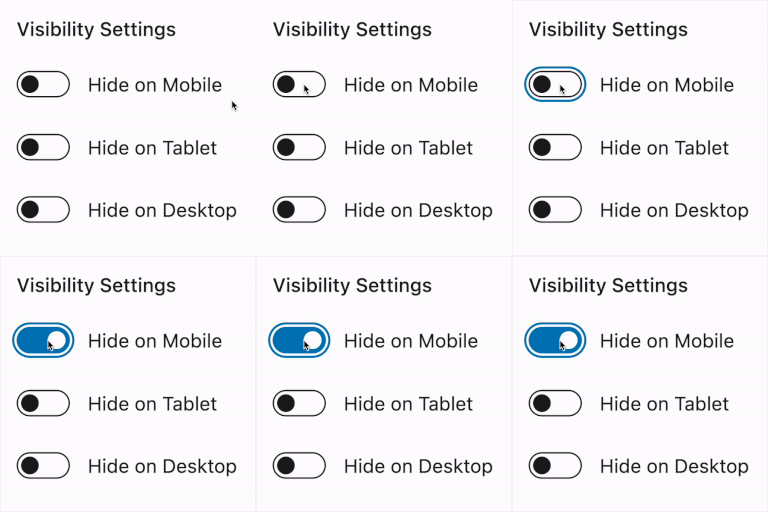
Visibility Controls for Editor Blocks adds native visibility settings to the WordPress block editor, so you can hide or show Gutenberg blocks based on screen size and user login status without writing custom CSS. Use it to hide blocks on mobile, tablet, or desktop, show different content to logged-in users and guests, and fine-tune responsive layouts with your own breakpoints. The controls appear directly in the block editor sidebar, so you can manage visibility while editing your content. On WordPress 7.0 and newer, the device controls stay in sync with the editor’s built-in Hide block modal, so changing Hide on Mobile, Tablet, or Desktop in either place updates the same block visibility setting. The plugin works with regular Gutenberg blocks and modern dynamic blocks, including block theme and site editor contexts. Need more advanced conditional visibility? Visibility Controls for Editor Blocks Pro adds user role visibility, date and time scheduling, URL/query parameter rules, and an optional cache-friendly frontend mode for scheduled and URL-based rules. Key Features: Device visibility controls: Hide blocks on mobile, tablet, or desktop. Login status visibility: Show or hide blocks for logged-in users or non-logged-in visitors. Custom breakpoints: Define what counts as mobile and tablet for your own theme. WordPress Hide block sync: Keep device visibility controls aligned with the built-in Hide block modal in WordPress 7.0 and newer. No custom CSS needed: Manage block visibility directly from the editor sidebar. Gutenberg integration: Visibility options appear where you already edit block settings. Dynamic block support: Works with server-rendered blocks, block themes, and modern WordPress layouts. Pro Features: User role visibility: Show or hide blocks for selected WordPress user roles. Date and time scheduling: Display blocks only during a selected time window. URL and query rules: Show blocks only when a URL parameter is present or matches a specific value. Cache-friendly frontend mode: Optionally evaluate scheduled and URL rules in the visitor browser for cached pages. Role list control: Choose which WordPress roles appear in the block editor controls. Ideal For: Content creators who want to hide large or secondary blocks on smaller screens. Site owners who want to show different calls to action to guests and logged-in users. Designers who need responsive Gutenberg layouts without writing one-off CSS. Developers and agencies who want simple block visibility controls for client sites. With Visibility Controls for Editor Blocks, you can keep one clean editor workflow while tailoring the frontend experience for different devices and visitors. Video tips for using the Visibility Controls for Editor Blocks plugin: License This plugin is licensed under the GPLv2 or later. You can find more information at https://www.gnu.org/licenses/gpl-3.0.html.
Top keywords