Code Engine – PHP Snippets, AI Functions & Automation for WordPress
Code Engine is a snippets manager that doesn’t stop at snippets. Yes, it runs your PHP and JavaScript exactly where and when you want: frontend, backend, on a schedule, or inside your content. But its real magic is what happens after you write a function: the same little piece of code instantly becomes a tool your AI chatbots can call, a step you can drag into a visual workflow, and an endpoint the outside world can trigger. One function, three superpowers. Most “code snippets” plugins stop at a textarea and a toggle. Code Engine treats your functions as first-class building blocks for the whole Meow Apps ecosystem, and for anything that can speak REST. Think out of the box, let your creativity flow, because the possibilities really are endless! ✨ For more, check the official website and come say hi on the Discord. Quick Intro Hello! ☀️ I built Code Engine because I was tired of pasting mystery snippets into functions.php and praying. I wanted a place where small bits of code are organized, safe, AI-assisted, and reusable everywhere. Here’s the idea. You write a function (or let the AI write it for you from a plain-English description). That function immediately shows up in three places: AI Engine: your chatbots and MCP clients (Claude, ChatGPT, Claude Code) can call it as a tool, with real arguments. Ask “how many orders shipped today?” and your chatbot runs your function to answer. Workflow Engine: your function appears in the step picker as its very own block. Drag it onto the canvas, wire it between an AI step and a Slack step, done. No glue code. REST / External tools: give it a secure endpoint and a token, then trigger it from Make.com, n8n, Zapier, a cron job, or a webhook. You never wrote an “integration.” You just wrote a function. Code Engine did the rest. 🤝 Core Modules 🧩 Snippets Manager Backend, Frontend, Persistent, Scheduled, Functions, and in-content (PHP/JS) snippets, all in one clean dashboard with tags, search, scope filters, and priorities. 🪄 AI-Assisted Coding Describe what you want in plain English and let AI Engine write the snippet: code, name, arguments, and scope included. Refine existing code or implement it straight from your comments. 🤖 Functions as AI Tools Every Function snippet becomes a function-calling tool and an MCP tool, so your AI Engine chatbots (and external AI agents) can actually do things on your site, not just talk. 🔀 Functions as Workflow Steps Workflow Engine surfaces each of your functions as its own draggable step. Your custom logic becomes a first-class citizen on the automation canvas. 🌐 External Access (REST) Expose any runnable snippet through a secured REST endpoint with a bearer token. Perfect for Make.com, n8n, webhooks, and scheduled external jobs. 🛡️ Safe Mode A snippet that throws a fatal error is automatically caught and disabled before it can take your site down. Code with confidence. ⏰ Scheduling Run a snippet daily at a chosen time via WP-Cron (reports, cleanups, syncs) without touching the server crontab. 🧱 Code Blocks & Shortcodes (Pro) Drop PHP or JS straight into a post or page with a Gutenberg block or the [code-engine] shortcode, with safety guards. 🧩 Snippets, the way they should be Code Engine organizes your code by scope, so each snippet runs exactly where it belongs: Persistent: runs everywhere (frontend and backend). Your everyday “add this to functions.php” code, but managed. Frontend: runs only on the public site. Backend: runs only in the admin. Function: a named, callable function with typed arguments and defaults. This is the reusable building block (see below). Scheduled: runs on a WP-Cron schedule, at the hour and minute you pick. Content (PHP / JS): runs inside a specific post or page, via a Gutenberg Code Block or the [code-engine] shortcode (Pro). Everything is searchable, taggable, sortable by priority, and importable/exportable. The CodeMirror editor gives you proper syntax highlighting and keyboard shortcuts (Cmd+S to save, Cmd+Enter to run). A nikic/php-parser pass validates your PHP before it ever runs. 🪄 Let AI write it for you Don’t feel like writing the boilerplate? Describe the snippet in plain language and Code Engine, powered by AI Engine, generates the whole thing: the code, a sensible name, a description, the right scope, and, for functions, the argument list with names, types, and defaults. Already have code? Ask the AI to modify it from a prompt, or write a few comments describing what you want and let it fill in the implementation. It’s pair programming, right inside your dashboard. ✨ The big idea: write once, use everywhere This is what makes Code Engine different. A Function snippet is not just code you call from other code. It’s a reusable capability that the rest of your stack can plug into. The moment you save it, the same function is available in three places at once: 1. As an AI tool, for chatbots and AI agents With AI Engine active, your functions are exposed through function calling and over MCP (Model Context Protocol). Your on-site chatbot can run them mid-conversation, and external AI agents (Claude, Claude Code, ChatGPT, OpenClaw) can call them too. Want a chatbot that checks stock, looks up a booking, or kicks off a process? Write the function; the chatbot gains the skill. 2. As a workflow step, for automation With Workflow Engine, every active function shows up in the Add-step picker as its own block, named after your snippet, with one input per argument. Drag it onto the canvas and wire it between other steps: an AI step that summarizes, your function that saves, a Social Engine step that posts. There’s also a generic “Execute snippet (by ID / by name)” step when you want to call one dynamically. You never write integration code; your function is the integration. 3. As a REST endpoint, for the outside world Give a snippet a custom endpoint name and a bearer token, and it’s instantly callable from anywhere: POST /wp-json/code-engine/v1/snippets-endpoint/your-endpoint Pass arguments as JSON in the body, secure it with a token, and trigger it from Make.com, n8n, Zapier, GitHub Actions, or a humble cron job. Automation without a middleware bill. 🛡️ Safe by default Running arbitrary code is powerful, so Code Engine takes safety seriously: Safe Mode catches fatal errors and auto-disables the offending snippet, so a typo never white-screens your site. REST whitelisting means global snippets only run on trusted REST routes by default, so you choose what to open up. Per-snippet tokens secure your external endpoints. Validation with a real PHP parser before code is saved. For developers who want fewer guardrails, there’s a “Bypass REST Security” option and filters (mwcode_rest_authorized, mwcode_rest_whitelist) to tailor exactly what’s allowed. Works beautifully with the Meow Apps family Code Engine is one engine in a connected set, each one useful alone, magical together: AI Engine: chatbots, content generation, and MCP. Turns your functions into AI tools. Workflow Engine: visual automation. Turns your functions into draggable steps. SEO Engine: smart, lightweight AI SEO. Social Engine: schedule and automate social posts. Why Code Engine? Reusable, not throwaway Other snippet plugins give you a place to paste code. Code Engine gives you a place to build capabilities that your AI, your workflows, and your external tools can all use. Native to WordPress Clean, fast, and built the WordPress way. No clunky external dashboards, no bloat. AI-native Write snippets with AI, expose them to AI. The whole loop lives in your wp-admin. Developer friendly REST API, MCP tools, function calling, scheduling, import/export, and plenty of filters to hook into. Cared for Part of the Meow Apps family, with regular updates and a real human behind it. 💕
Top keywords
- code32×2.48%
- engine25×1.94%
- ai22×1.71%
- function18×1.40%
- rest13×1.01%
- snippet13×1.01%
- code engine11×0.85%
- functions11×0.85%
- write10×0.78%
- runs9×0.70%
- snippets9×0.70%
- step9×0.70%
OrderBridge – Multi-Channel Export for WooCommerce
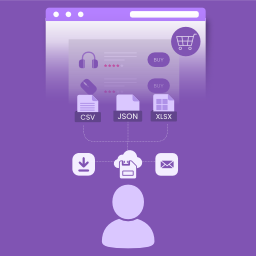
OrderBridge – Multi-Channel Export for WooCommerce simplifies the process of generating and sharing order data. Store owners can set up automated exports with minimal configuration, allowing customers to receive order details effortlessly. Admins can also access exports directly from the WordPress dashboard. See OrderBridge – Multi-Channel Export for WooCommerce in action: Try the live demo → Key features Export sections/triggers Automated email attachments: Automatically attach export files to WooCommerce emails such as ‘Completed order’, ‘Processing order’, or other status emails, ensuring customers receive their order data without manual intervention. Admin downloads: Admins can generate and download export files directly from the order edit page in the WordPress dashboard for quick access. Customizable templates Select columns from categories like: Order Item: name, product_id, quantity, price, and more. Product: status, description, short_description, sku, and more. Additional categories: Order Item Meta, Order, Product Attributes, and Product Taxonomies. Dynamic File Names: Use placeholders like {order_id}, {date}, {time} for clear, context-specific file names (e.g., “Order_123_20250717.csv”). Preview templates: easily preview templates with previous placed orders Use case Ideal for B2B customers needing detailed order summaries for accounting, inventory management, or integration with third-party systems. Automates exports, reducing manual work and empowering customers with easy access to their order data. Pro features 🚀 Enhance your store with advanced automation and integration capabilities: Google Drive Integration: Automatically upload exports to customers’ Google Drive accounts Set up automatic uploads on order events (processing, completed, etc.) Customers manage their own folder structure through intuitive interface Secure OAuth authentication for maximum data safety Customer Downloads: Allow customers to download order exports directly from their ‘My Account’ order list Self-service approach reduces support tickets Perfect for B2B customers who need regular access to order data Additional File Formats: Export to Excel (XLSX), ODS, XML, and JSON Professional formats for accounting and ERP systems XML/JSON for seamless API integrations Advanced Template Options: Include specific product attributes (custom product meta data) with developer-friendly filters Add custom fields via WordPress filters for unique data transformations or calculations Unlimited customization possibilities for complex business needs Perfect for businesses requiring advanced automation, multiple export channels, and professional file formats. Why choose this plugin? Effortless automation: Set up exports once; the plugin handles the rest. Highly customizable: Tailor templates and file names to your workflows. B2B-Friendly: Simplifies data sharing for professional uses and system integrations. For more details or to upgrade to Pro, visit our website. Developer Information This plugin uses build tools to compile JavaScript assets. Source code: – Source JS files: /admin/js/ and /public/js/ – Compiled builds: /build/ – Build config: webpack.config.js – Dependencies: package.json To build the assets: 1. Install Node.js dependencies: npm install 2. For development: npm run start 3. For production: npm run build All source code and build configuration files are included in this plugin package. Requirements WooCommerce plugin installed and activated Pro only: PHP OpenSSL extension (required for Google Drive integration) Configuration Configure these plugin-specific settings: Main settings Go to: WooCommerce > Settings > OrderBridge – Multi-Channel Export for WooCommerce Create a template with your preferred columns Select which sections/triggers you want to use Optional: preview the template Additional Information For more information and other WordPress plugins, visit Wijnberg Developments.